
 to switch to
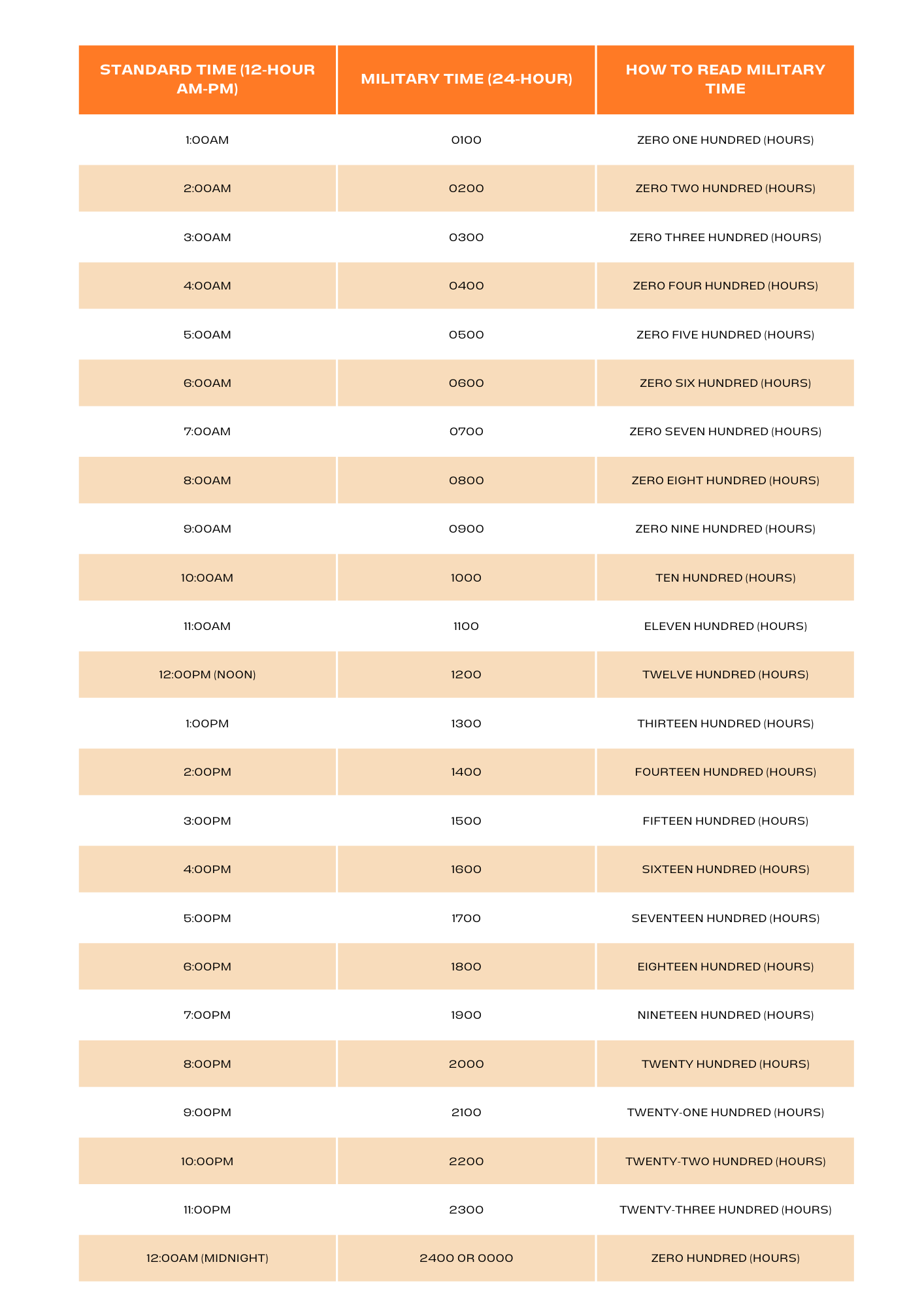
The removal of ambiguity is a key benefit of using military time.
In military operations, where precision is essential, the 24-hour clock system eliminates any confusion between AM and PM.
Despite the term “military time” being widely used, the 24-hour clock system was not originally created by the military.
The 24–hour clock is said to date back to the Ancient Egyptians and it had already been in use across Europe for many years before the U.S. military adopted it.
The U.S. Navy Seals started using the 24-hour clock in 1920, after encountering it during World War I. However, the U.S. Army didn’t officially implement military time until 1942.
In military time, there are no AM or PM distinctions, as each hour is assigned a unique number without repetition.
The time of day is represented by four digits, with the first two indicating the hour and the last two indicating the minutes.
For instance, 1:00 a.m. is written as 0100 hours, and 1:00 p.m. is written as 1300 hours.
Neither system is inherently better or worse than the other.
The 12-hour clock can be more prone to confusion since it’s necessary to specify AM or PM to avoid misunderstandings.
On the other hand, the 24-hour clock can take more time to communicate, and a special clock may be needed to avoid displaying two sets of numbers on the face.