An Easy Guide to Time Tracking 2026
We created this time tracking guide to explain how people track work hours and why it matters in day-to-day work.
What Is Time Tracking?
Time tracking means recording how much time is spent on tasks or projects.
By logging time regularly, individuals can see where their hours go and how their day actually unfolds. This often leads to better planning and fewer surprises at the end of the week.
Why Do People Use Time Tracking?
People track time to understand their workload more clearly. It helps reveal which tasks take longer than expected and where time slips away.
Over time, this makes it easier to prioritize work and manage deadlines.
How Can Time Be Tracked?
Time can be tracked manually or automatically. Manual tracking involves entering hours by hand, while automatic tracking records time as work happens.
Each method offers visibility, but automation often saves time and reduces missed entries.
What Is Time Tracking Software?
Time tracking software automates the process of recording work hours.
Many tools also include features like attendance tracking, payroll support, and reporting. These features give teams a clearer picture of how time connects to output and costs.
What Does This Time Tracking Guide Cover?
We have carefully curated this guide through our research, knowledge, and experience. We hope it helps clarify the ins and outs of time tracking as well as unique features offered by time tracking software.
Download the guide below to explore time tracking in more detail.
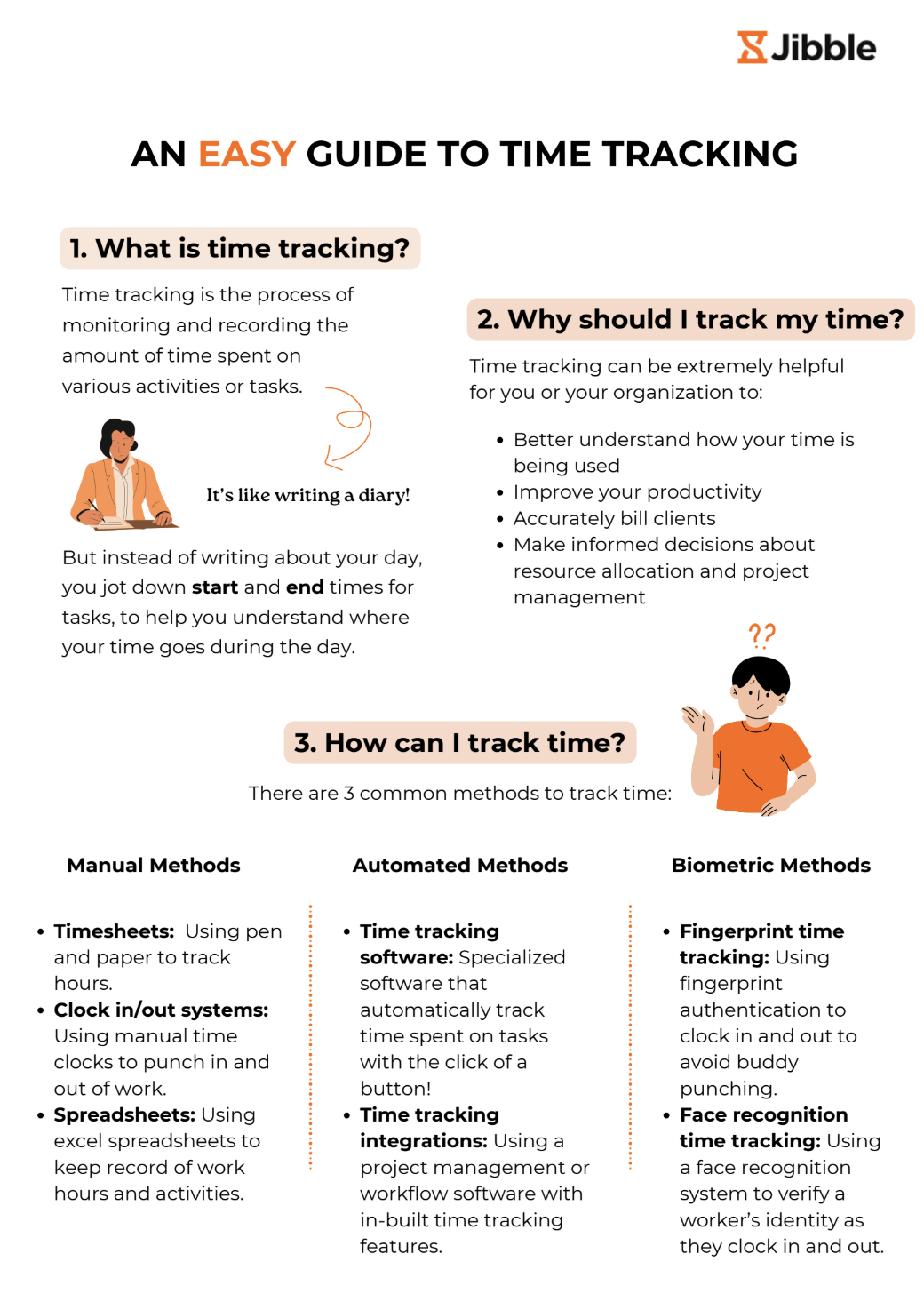
Jibble’s easy guide to time tracking

Create an account and take the hassle out of time tracking - it's FREE forever for unlimited users!